How-to
Spice Organization Ideas for Every Kitchen Size
This article may contain affiliate links. Please read our Affiliate Disclosure policy.
Quick answer: The best way to organize spices is to count your jars, decide where you cook, and choose storage that fits both: a drawer insert if you have a spare shallow drawer, a tiered riser or turntable in a cabinet, a door rack for a small collection, or a wall rack for tight kitchens. Keep spices in a cool, dark, dry place away from the stove, label them so you can read them quickly, and toss any that smell or taste faded.
Spice clutter is easy to create: every recipe adds a new jar, and soon you are buying a second paprika because you cannot find the first. A little structure fixes that.
Step 1: Take stock
Pull every spice out. Check each one for color and smell. Spices that no longer smell like much are not doing your food any favors. Manufacturers give guidance on how long ground and whole spices keep their flavor. Combine duplicates and write down how many jars you keep.
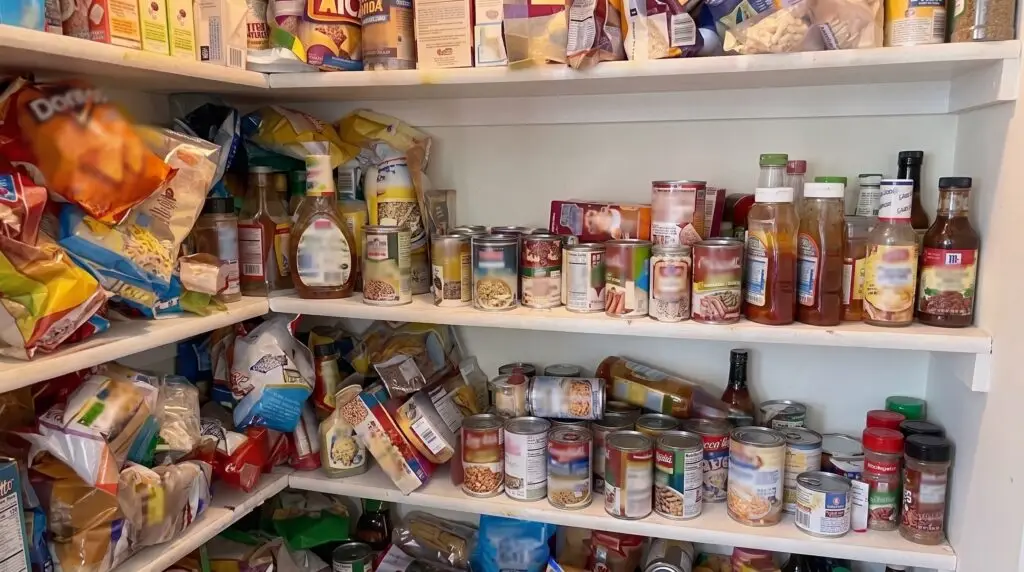
Refer to Small Pantry Organization: Step by Step Guide, where I have three boxes for keep, use soon and toss/donate for all the items including spices and jars.
Step 2: Store them where it makes sense
Spices keep best in a cool, dark, dry place, so avoid shelves right above the stove or in direct sun. Usually this information is printed on the bottle of the spice. Keep the spices you use most within reach of the stove, and the rest further away.
Step 3: Choose storage for your space
The right spice storage depends on three things: how many jars you own, how much space you can spare, and where you cook. Work through them before you buy anything.
- A spare shallow drawer: an angled insert lays jars flat so you can read every lid at a glance.
- A standard cabinet: a tiered riser lifts the back row, and a turntable brings corner and deep-shelf jars within reach.
- A pantry or cabinet door: an over-the-door rack suits a small collection and uses space you are not using now.
- A tiny kitchen: magnetic tins or a wall rack keep spices handy. Renters, check your lease before you drill or stick anything to the wall.
- The counter: keep only the spices you use every day there, and away from the heat and sun near the stove.
Measure the drawer, shelf or door before you choose, and check that your tallest jar fits. You will find options for each of these spaces in our picks below.
Which should you choose?
- Fewer than 20 jars: a riser or a door rack is usually enough.
- 20 to 40 jars: a drawer insert or a tiered riser plus a turntable.
- More than 40: reconsider what you really use, then pick a drawer or a dedicated cabinet. I would prefer a dedicated cabinet where all the spices are visible to me.
Step 4: Decide how to sort
- Alphabetical: easiest to learn, good for large collections.
- By cuisine: useful if you cook Mexican, Italian or Indian dishes often.
- By use: baking spices together, grilling rubs together, everyday seasonings in front.
Pick one and stick with it.
Step 5: Label so you can read it
Put the spice name on the lid and on the side of the jar. In a drawer you see the lid, so label the lid. On a shelf you see the side, so label the side. Add the purchase date if that helps you rotate.
Step 6: Refill with care
Buying a bulk bag and refilling small jars saves money if you finish them. If you decant, keep the original label or a note of the best-by date.
A simple starter spice list
If you are building a collection, these twelve cover many recipes: salt, black pepper, garlic powder, onion powder, paprika, cumin, chili powder, oregano, cinnamon, red pepper flakes, Italian seasoning and bay leaves. Adjust for the food you cook.
Spice organization for small kitchens
- Use the inside of a cabinet door for a rack. Check that the door still closes.
- Use a magnetic strip on the side of the fridge for small tins. Check the fridge surface and weight.
- Use a turntable in a corner cabinet instead of a deep shelf.
See our guide to small kitchen storage for renters for no-drill options.
Our picks for spice organizers
We have exclusively selected these spice organizers to suit different needs.
| Storage type | Best for | Watch out for |
|---|---|---|
| Drawer insert (angled tray) Silicon Adjustable and expandable Universal Fit 10’ Roll Small 3 sections | A spare shallow drawer, up to a large collection | Drawer depth: measure first |
| Cabinet riser or tiered shelf 2 pack stackable 3 tiers acrylic 4 tiers adjustable | Standard cabinets | Shelf height and door clearance |
| Turntable Rectangle turntable 12 inch anti-rust 2 tiers adjustable height | Corners and deep shelves | Jars that tip or hang over the edge |
| Over-the-door rack 6 tiers 2 basket size 6 tiers heavy duty | A small collection, pantry doors | Door thickness and clearance |
| Wall or magnetic rack Screw/adhesive 2 packs wall mounted 2 packs adhesive 2 packs magnetic 4 packs magnetic 12 magnetic glass tins 4 metal plates with spice tins | Tiny kitchens | Weight and wall rules (renters: check your lease) |
| Countertop rack 3 tiers adjustable 20 jars revolving countertop 3 tiers pull out 3 tiers solid wood | Daily spices only | Heat and sun near the stove |
| Pull out spice rack Bamboo with 2 slide outs Heavy duty 1 tier pull out Pull out 1 tier chrome | Deep base cabinets where jars get lost at the back | Cabinet opening width and depth: measure first and check the weight limit |
Quick answers
What is the best way to organize spices?
Count your jars, choose storage that fits your space, and sort by one system such as alphabetical or by use. Keep spices in a cool, dark, dry place away from the stove, label lids or sides so you can read them, and replace spices that have lost their smell.
What are some good ideas for organizing spices?
Try an angled drawer insert, a tiered cabinet riser, a turntable for a corner, an over-the-door rack, or magnetic tins on the fridge. The right choice depends on how many jars you own and how much space you can spare.
What are the best spice organizers?
The best spice organizer is the one that fits your measured space and your jar sizes. Drawer inserts suit big collections, risers suit standard cabinets, and door or wall racks suit small kitchens. Measure first, then check the jar size the product holds.
What should every spice rack have?
A basic spice rack covers salt, black pepper, garlic powder, onion powder, paprika, cumin, chili powder, oregano, cinnamon, red pepper flakes, Italian seasoning and bay leaves. Add others based on the cuisines you cook most often.